
Emergency Chimney Sweep Near Me: What Montecito Heights Homeowners Should Do First
If smoke is pouring into your living room or you’ve just heard that freight-train roar in the walls, stop searching “emergency chimney sweep near me” and do this first: close the damper, shut off the air supply to the firebox, and get everyone out of the house while you assess whether you’re dealing with an active chimney fire or a dangerous draft failure. Most chimney emergencies don’t need a fire truck. But a few of them are seconds away from becoming structural fires, and knowing which one you have changes everything about the next 30 minutes. If you’d rather not sort this out alone, call (866) 282-3944 and we’ll walk you through it.
First: Recognize What You’re Actually Dealing With
A chimney fire can burn at over 2,000°F inside the flue and be over in minutes, or it can smolder undetected for hours. The sound people describe as “a train roaring in the walls” is the dramatic one. The one that burns houses down is usually the quiet one, and it produces almost no noise at all.
There are three scenarios that send Montecito Heights homeowners searching for an emergency chimney sweep, and they require three completely different responses:
- Active chimney fire. You hear a loud cracking or rumbling, you see flames shooting from the top of the chimney, or you notice dense smoke and intense heat radiating from the fireplace. This is a 911 call, not a sweep appointment.
- Slow-burn chimney fire. Little to no visible flames, but a strong hot odor, maybe a clicking or ticking sound, and the fire in the firebox seems to be burning unusually hot. This is the one that damages liners and transfers heat into the framing around the flue. You need the fire department to verify it’s out, then a Level 2 inspection before the fireplace gets used again.
- Draft failure or blockage. Smoke backs into the room, the fire won’t stay lit, or you notice a smell like damp soot. This isn’t a fire, but it’s still urgent: carbon monoxide is accumulating inside your house, and you shouldn’t wait to address it.
We’ve seen all three in homes throughout Montecito Heights. The distinction matters because the actions you take in the first 30 minutes are not the same.
If It’s an Active Chimney Fire: The Exact Sequence
Do not search for a chimney sweep. Do not collect photos for insurance. Do not stand there watching it. Here’s the order:
- Close the damper. This cuts the chimney’s oxygen supply. Fire needs air, and the damper is the fastest way to starve it.
- Close the fireplace doors or glass screen. This further limits air flow into the firebox and contains any embers that might pop out.
- Close the air intake vents on the stove or fireplace if you have them. If it’s a wood stove, shut the primary air control completely.
- Get everyone out of the house. Including pets. Close doors behind you to limit air movement through the structure.
- Call 911 from outside the house. Tell the dispatcher you have a possible chimney fire. Firefighters will evaluate the flue, the attic, and the wall cavities around the chimney with thermal imaging. Let them. This is not the time to be embarrassed about calling them.
After the fire department confirms the fire is out, you call us. Not before. We’re not going to send a sweep into a chimney that’s still holding heat in the framing. But once the all-clear is given, we’re the ones who inspect the flue for damage before anyone lights another fire in that fireplace.
If It’s a Slow-Burn Fire: What Montecito Heights Homeowners Miss
A slow-burn chimney fire doesn’t announce itself. You might notice the fire in the fireplace burning hotter and louder than usual, or a clicking sound that comes and goes. Sometimes there’s a strong, acrid smell that’s different from normal wood smoke. And then it’s over, and it’s easy to convince yourself it was nothing.
In Montecito Heights, that’s a dangerous assumption. Hillside homes here are predominantly wood-frame construction, and the framing members often sit close to the flue. A slow-burn fire can get creosote deposits burning inside the flue at temperatures that crack clay tile liners without ever producing visible flames. The heat can transfer to the studs, the floor joists, and the roof framing surrounding the chase. Those members can then smolder for hours after the fire in the flue has gone out.
What should you do?
- Call 911 if you smell smoke and can’t identify the source. The fire department has thermal imaging cameras that can scan walls and ceilings for hidden heat. We’ve responded to calls where the homeowner thought it was a draft issue and the framing was already holding heat.
- If the fire department confirms no active fire, do not use the fireplace again. The flue needs a Level 2 inspection with a camera before it’s safe. A Level 2 isn’t the standard sweep-and-visual-check. It’s a full interior inspection using a video camera that documents every inch of the flue liner. We’re looking for hairline fractures, separated tile joints, and signs that heat transferred through the flue into the surrounding structure. Those fractures are how a second chimney fire spreads into the house.
- Document what happened. Write down the date, what you observed, and any actions you took. If the chimney fire causes damage that leads to an insurance claim, a clear written record matters. Take photos of the firebox, the chimney cap area, and anything the fire department notes in their report.
One more thing that surprises people: slow-burn chimney fires are almost always the result of neglected creosote buildup. The chimney isn’t burning clean because the flue is lined with fuel. That’s not a “bad luck” problem. It’s an annual-maintenance problem, and it’s one we solve every day with a proper chimney sweep in Montecito Heights.
If It’s Smoke Backing Into the Room: Stop Using It, Then Call
Smoke backing into the living room is usually a draft or blockage problem, not a fire. But it’s still urgent, because every minute of backdrafting puts carbon monoxide into your living space.
Here’s the quick diagnostic we run through with callers in Montecito Heights:
- Has the fireplace been used in the last few weeks without issue? If yes and today it’s suddenly backdrafting, something changed. A bird or squirrel nest, a partially collapsed flue tile, or wind pressure from a shift in weather. Any of these can appear suddenly.
- Is this the first fire of the season? Montecito Heights homes at higher elevations sometimes struggle with cold flues and atmospheric inversions in early winter. The stack effect hasn’t kicked in, and you’re fighting a column of cold air sitting in the chimney. Sometimes a warm-up fire helps, but if the problem persists, there’s a blockage.
- Does the chimney smell even when it’s not in use? That’s often a creosote issue or moisture in the flue, and it’s worth addressing before the burning season gets going. A blocked flue pushes smoke into the house now and can become a chimney fire later.
- Do you have a carbon monoxide detector in the room? If not, get one today. We shouldn’t have to say this, but we keep finding homes in the neighborhood without functioning CO detectors within 15 feet of the fireplace. That’s a $25 fix that can prevent a fatal mistake.
If you’re seeing smoke, close the damper, open a window to vent the room, and get the fireplace evaluated before lighting it again. This is a chimney repair in Montecito Heights situation, not just a cleaning, sometimes. A camera inspection tells us which one within minutes.
What We’re Looking for After Any Emergency
After any suspected chimney fire, a Level 2 inspection is non-negotiable. That’s not upselling. That’s the standard set by the National Fire Protection Association, and it exists because chimney fires leave damage you cannot see from the firebox opening.
Here’s what that inspection involves in Montecito Heights homes:
- Full video scan of the flue interior. From the firebox up to the chimney cap. We’re looking at the liner surface in real time, and you can see it too. If there’s a crack, a separated joint, or a missing section of tile, it’s on the screen.
- Clearance evaluation. In older hillside homes, construction practices varied. We measure the distance between the flue and the surrounding wood framing to confirm it meets or exceeds current code. Many pre-1980s homes in this area do not.
- Creosote stage assessment. We document the thickness and type of creosote, because the next step depends on it. Glazed creosote from a low-temperature fire is harder to remove and burns hotter if it ignites. A standard brush won’t touch it.
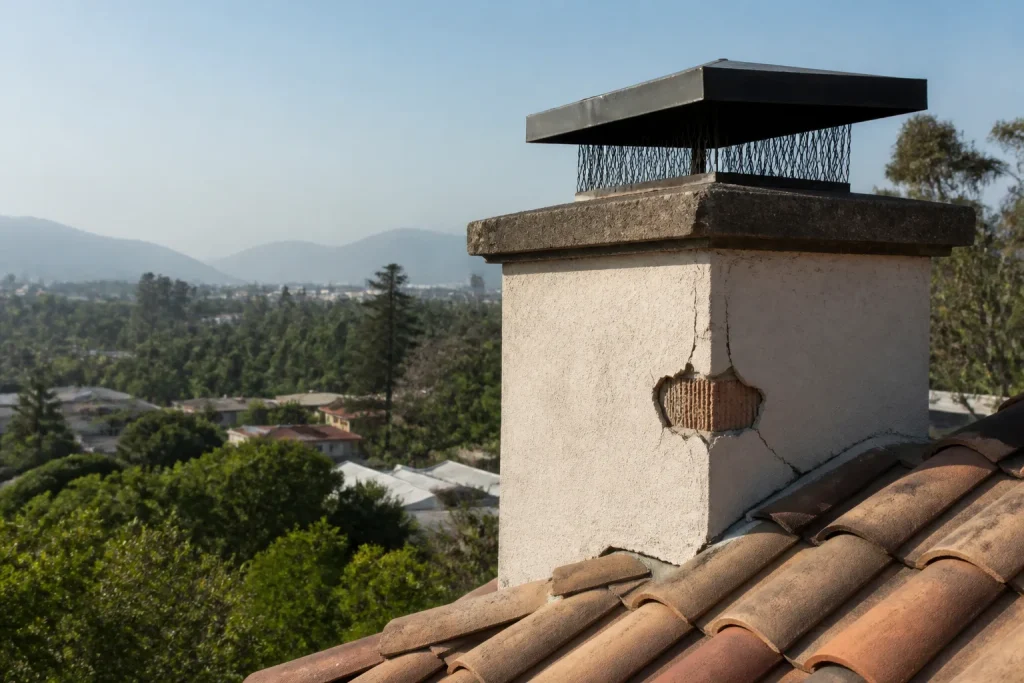
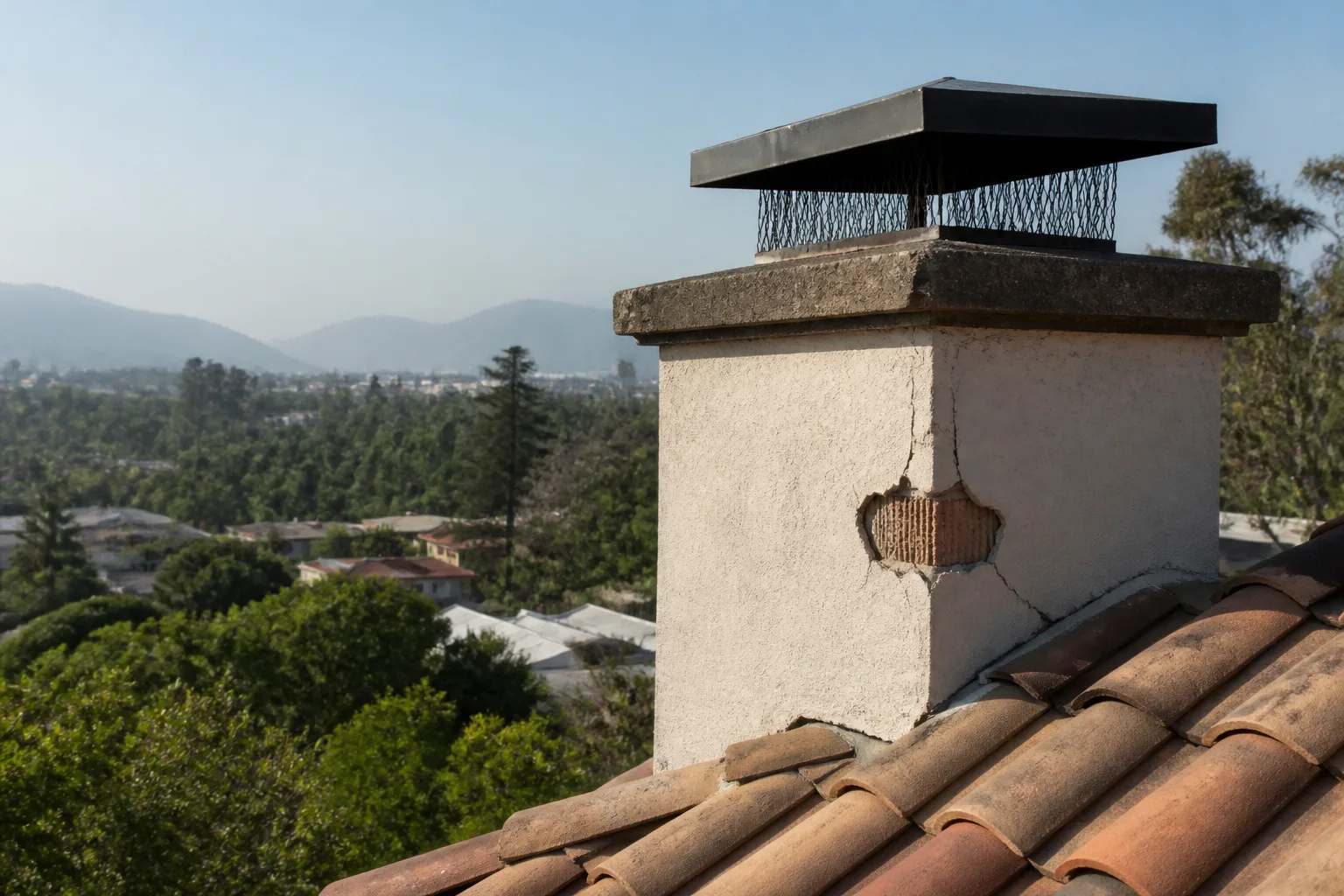
- Structural check of the chimney chase and cap. Rain caps that are missing or damaged let water in, and water plus creosote is a slow destructive combination.
If the liner is compromised, we don’t improvise. We spec a purpose-engineered solution like a HeatShield resurfacing system or a DuraFlex liner from Olympia Chimney or Gelco. There’s no patch it and send it approach here. A fractured liner in a wood-frame chase is exactly how houses in hilly neighborhoods like this one burn down months after a chimney fire everyone thought was handled.
If There’s an Insurance Claim: What to Document Before the Sweep Arrives
Insurance adjusters are not chimney experts. They’ll ask for documentation that proves the damage happened and wasn’t pre-existing neglect. Our experience with claims in the LA market has taught us what helps:
- Keep the chimney as-is until it’s inspected. Don’t clean it. Don’t attempt repairs. Adjusters need to see the post-event condition.
- Photograph everything before anyone touches it. The firebox, the smoke staining on the walls, the chimney exterior, and any debris that fell into the hearth.
- Request a written inspection report with photos. Our video scans produce still images that go right into the report. An adjuster can see the fracture and its location without ever visiting your home.
- Keep receipts for any emergency work. If we do a sweeping or repair as part of mitigating further damage, that’s a covered expense in many policies.
- Don’t agree to a settlement before a qualified chimney professional documents the damage. We’ve had neighbors in Montecito Heights call us after the adjuster already closed the claim, and that’s a much harder conversation.
And a quick story from last month: a homeowner over near the hillside side of Montecito Heights called us because their fireplace “wasn’t drafting right.” We pulled the chimney cap and found a raccoon had taken up residence. Not a fire, not a draft problem. Just a very committed tenant who’d been up there for weeks. We relocated it, cleaned out the nesting material, and installed a proper cap. The fireplace worked perfectly after. That’s the kind of “emergency” we like best.
When to Call a Pro (and When It’s Actually Not an Emergency)
If you’re reading this while smoke fills the room, call 911 first, then call us. We’ll help you schedule the Level 2 inspection once the fire department clears the scene.
If you’re reading this before burning season starts, you’re already ahead. Most “emergencies” in Montecito Heights are preventable with an annual sweep and inspection. Here’s our honest guidance on urgency:
- Call 911 immediately if you see flames in the chimney or hear the rumbling sound. No sweep can help you in that moment.
- Call us within 24 – 48 hours if you’ve had a chimney fire, even a minor one. The damage assessment can’t wait until next fall.
- Call us this week if you’re getting smoke backup, unusual smells, or the fireplace won’t draft properly. Carbon monoxide poisoning is not seasonal.
- Call us any time if you’ve never had the chimney inspected since you bought the house. Montecito Heights has a lot of older homes, and previous owners rarely leave behind maintenance records.
Related services in Montecito Heights: If your chimney needs a sweep, Chimney Sweep in Montecito Heights is where that happens. If the dryer vent is also on your mind, dryer vent cleaning in Montecito Heights addresses the other fire hazard most homeowners forget about. Same team, same standard. One call covers both. And if you’re not sure whether you even have a problem, Ironwood Chimney Sweep home is the best place to start.
The Bottom Line
An emergency chimney situation in Montecito Heights comes down to three decisions: Is it an active fire? Is it a hidden slow-burn? Or is it a draft failure pushing carbon monoxide into the house? The first means 911. The second means fire department verification, then a Level 2 inspection before another fire gets lit. The third means stop using the fireplace and get a camera into that flue.
Most importantly, don’t light another fire until you know what happened. Every chimney fire that damages a home in this neighborhood was preceded by a warning sign someone decided to ignore. The quick roaring ones are scary. The quiet ones are the ones that take the house. And whether you need a sweep, a repair, or a new liner, use a company that specs professional-grade materials like HeatShield, DuraFlex, and Gelco rather than whatever fits cheapest from the supply aisle.
If you’re in Montecito Heights and need help, Ironwood Chimney Sweep offers free estimates. Call (866) 282-3944 and we’ll tell you straight what you’re dealing with.
Frequently Asked Questions
An emergency chimney sweep in Montecito Heights typically runs between $250 and $500, depending on the level of creosote buildup and whether a Level 2 video inspection is required. If the emergency involves a suspected chimney fire, the inspection is separate from the sweep and costs more because of the camera work and documentation. Call (866) 282-3944 for an exact quote based on what you’re seeing. Estimates are free.
No. Even if the fire was small and everything looks fine from the living room, a chimney fire can fracture the liner and create gaps that let heat reach wood framing. The National Fire Protection Association requires a Level 2 inspection after any chimney fire before the fireplace can be used again. That’s not optional in a wood-frame neighborhood like Montecito Heights. Call (866) 282-3944 and we’ll get the camera in there.
An active chimney fire makes noise: rumbling, cracking, or a sound like a train moving through the walls. A draft problem is quieter and usually shows up as smoke backing into the room, a fire that won’t stay lit, or a sooty smell even when nothing’s burning. If you hear noise or see flames from the top of the chimney, call 911 first. If it’s smoke only, close the damper, open a window, and call us to inspect the flue before you use it again. (866) 282-3944.
At least once a year if you burn wood regularly. Homes in Montecito Heights that burn soft woods like pine or use the fireplace as a primary heat source often need sweeping every 50 to 70 burns, which for many families is mid-season. The emergency calls we get are almost always from chimneys that haven’t been swept in two years or more. Book a sweep before the burning season and you’ll sidestep most of this. Call (866) 282-3944 to schedule one.
Written by the team at Ironwood Chimney Sweep, serving Montecito Heights since 2013.
Need Chimney Cleaning Help?
Call Ironwood Chimney Sweep - licensed & insured, with free written estimates in Montecito Heights.
(866) 282-3944