
Last updated November 2, 2026
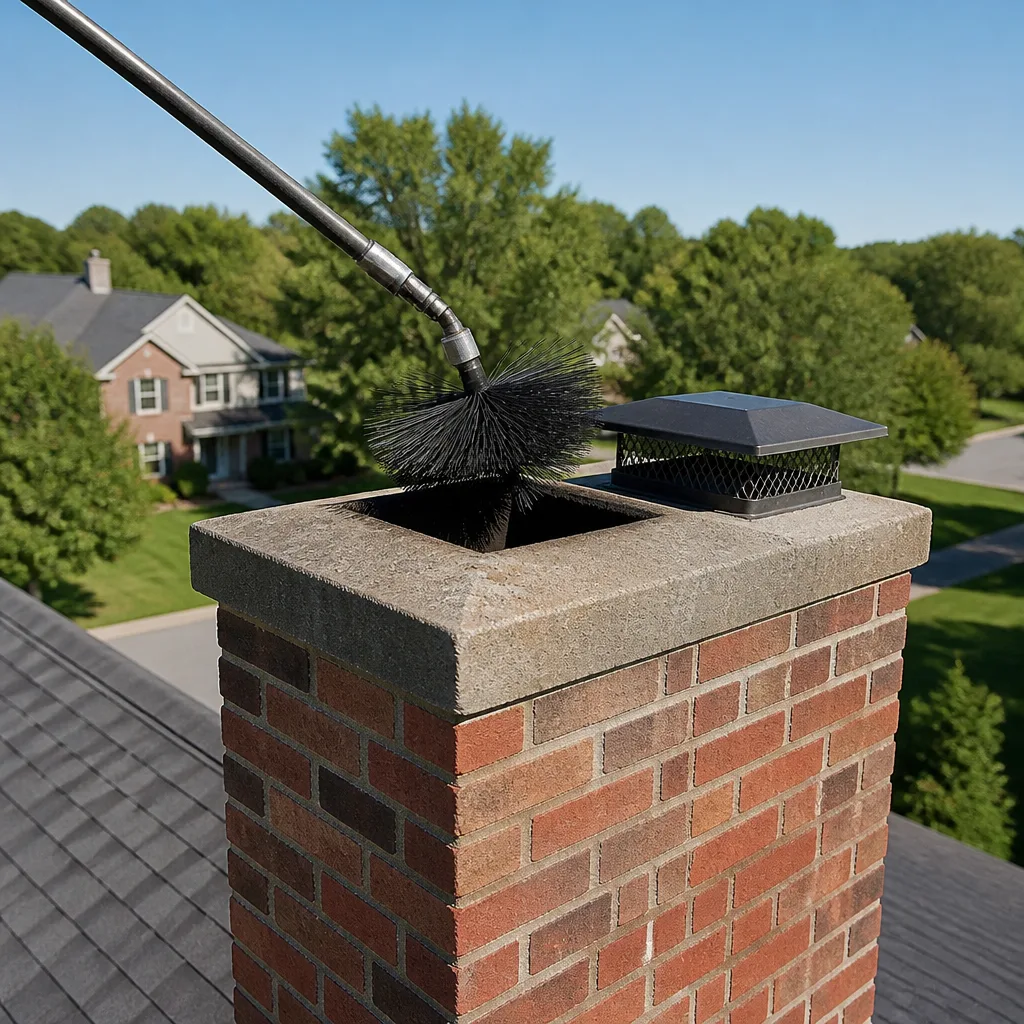 Sweep & inspection
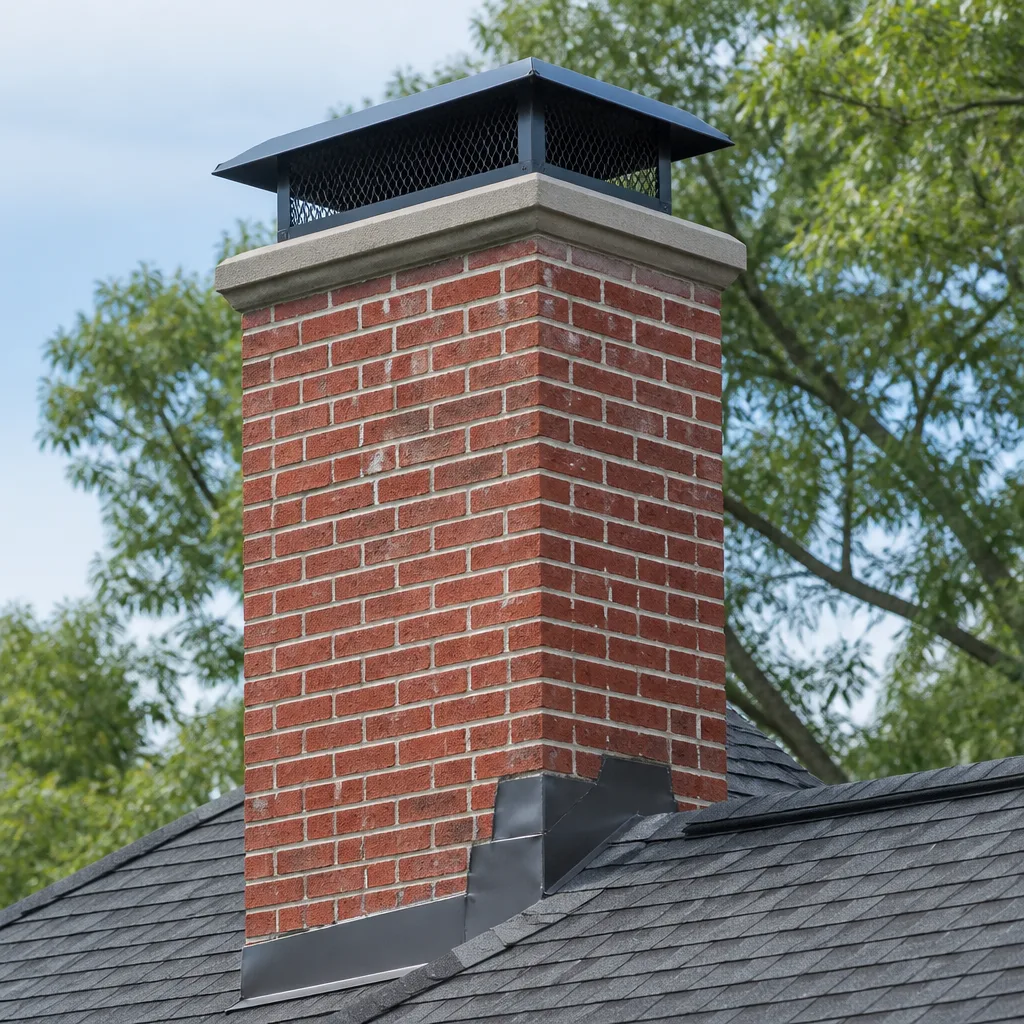 Caps & crowns
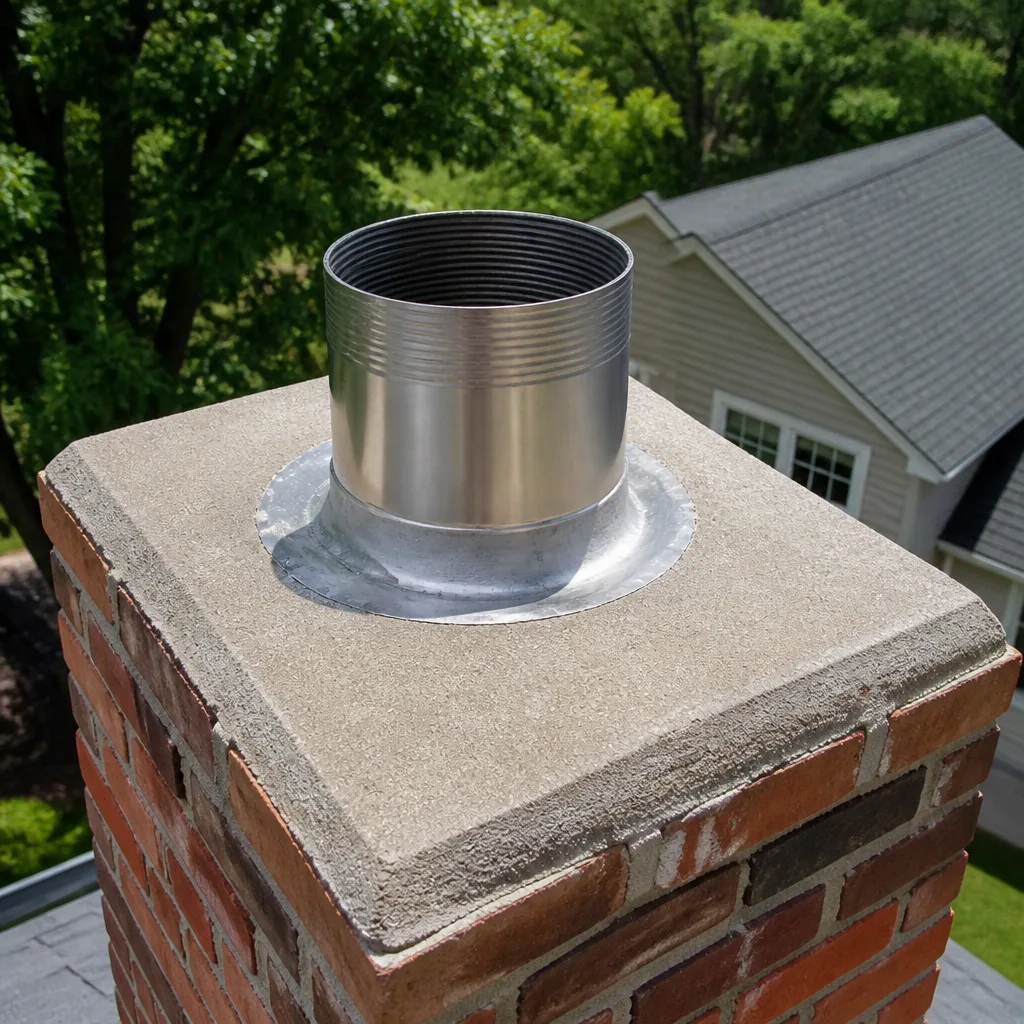 Flue relining
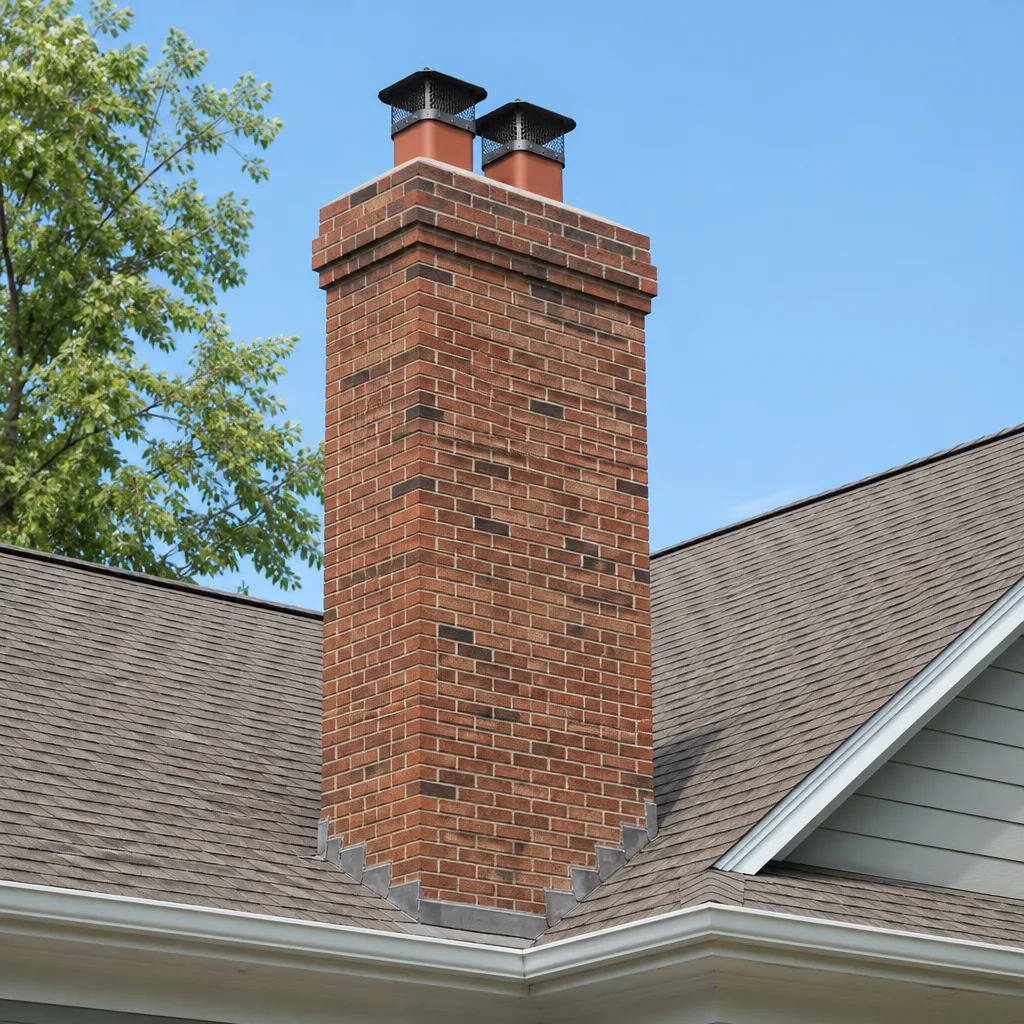 Masonry repair
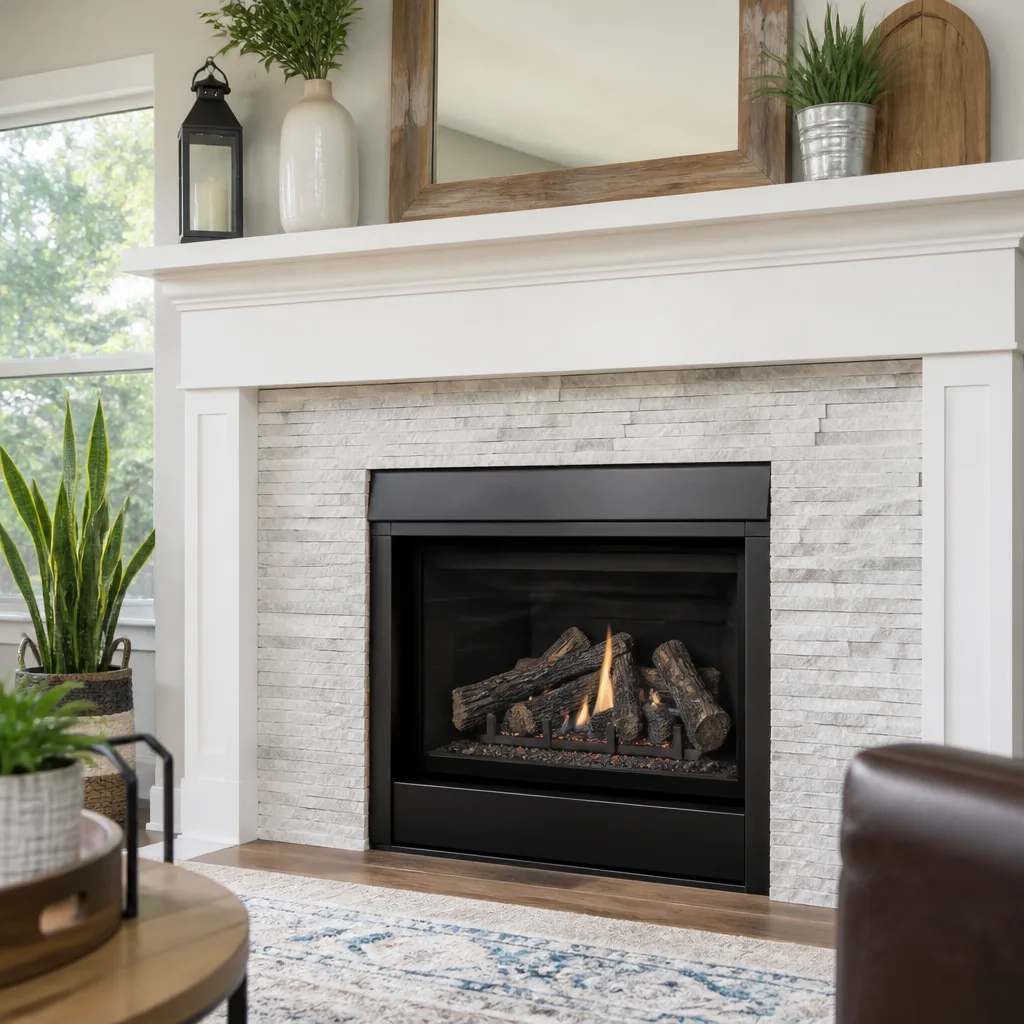 Gas fireplace service
Level 1 sweep and inspection to the NFPA 211 annual standard - flue, crown, cap, and flashing checked and photographed
Chimney sweep logs do not sweep chimneys. They loosen some creosote - which then falls where a brush and vacuum still have to collect it.
Chimney Cleaning Warning Signs: A Montecito Heights Homeowner’s Reference Guide
Most Montecito Heights homes were built between the 1920s and 1960s, which means most chimneys in this neighborhood have been through sixty to a hundred winters, several earthquakes, and more burn cycles than anyone can count. The homes have character. The chimneys have wear. The problem is that chimney damage rarely announces itself with drama. It shows up as a faint smell on a warm afternoon, a dusting of black specks on the hearth, a damper that fights back when you try to open it. These signals are easy to dismiss and expensive to ignore. This guide teaches you to read your chimney the way a sweep does: knowing what each sign means, which ones are urgent, and when you can wait.
Styles & brands we work with
- Sweep & inspection
- Caps & crowns
- Flue relining
- Masonry repair
- Gas fireplace service
Quick Answer
The most common warning signs that a chimney needs cleaning in Montecito Heights are: a smoke smell in the house when no fire is burning, black or oily residue on the fireplace walls or damper, smoke spilling into the room during use, and a fire that burns lazy or struggles to draw. Any one of these means creosote or an obstruction is interfering with your flue. If you’re seeing them, schedule a sweep before the next burn.
Table of Contents
- What Smoke Color Tells You About Creosote Risk
- Draft Problems: Reading Airflow by Feel and Smell
- Exterior Warning Signs: Efflorescence, Spalling, and Crown Cracking
- Interior Signs Beyond Smoke: Dampers, Oily Walls, and Hearth Dust
- Schedule Soon vs. Stop Now: A Decision Framework
- Why Montecito Heights Chimneys Age Differently
- Common Mistakes to Avoid
- When to Call a Professional
- Frequently Asked Questions
- The Bottom Line
What Smoke Color Tells You About Creosote Risk
Smoke is not just smoke. The color of what comes out of your chimney is a direct readout of what’s happening inside your firebox and flue, and each color points to a different underlying condition. Learning to read smoke color is the single fastest way to know whether your chimney is operating correctly or quietly building up a hazard.
White or light gray smoke, especially in the first ten minutes of a fire, is normal. That’s water vapor and unburned gases escaping while the firebox and flue come up to temperature. It thins out as the fire gets hot. If it persists for twenty minutes or more, you’re burning wet or unseasoned wood, which produces more creosote per hour than dry wood, even though the smoke looks harmless.
Gray smoke that’s thick and hangs low is a sign of incomplete combustion. Your fire isn’t getting enough air, or the wood is too wet, or both. In Montecito Heights, where many fireplaces are original to mid-century construction, a restricted air supply is common. Older fireboxes were often built smaller than modern wood stoves need, and the vents may not match the fire’s air demands. Thick gray smoke means creosote is forming faster than a hot fire would produce it.
Black or dark smoke is the one that should stop you mid-thought. Black smoke means heavy creosote is already present somewhere in the system, and the fire is hot enough to start burning it off in a way you can see. It can also mean you’re burning things that should never go into a fireplace: treated lumber, glossy paper, cardboard with ink, or household waste. These materials off-gas chemicals that bond to creosote and make it harder to remove later.
We’ve swept chimneys in Montecito Heights where the homeowner described the smoke as “a little dark sometimes” and the flue turned out to have a quarter-inch of glazed creosote lining the walls. Glazed creosote is the third stage of creosote: hard, shiny, and highly flammable. It cannot be brushed out with standard sweeping tools. It requires chemical treatment or mechanical removal, and in some cases a Chimney Repair in Montecito Heights service to address the underlying draft problem that created it. If you’re seeing black smoke, stop burning and have the flue inspected before the next fire.
Draft Problems: Reading Airflow by Feel and Smell
A chimney works on a simple principle: hot air rises, and rising air pulls fresh air into the fire. When that pull reverses, your chimney becomes a vent for stale air and combustion byproducts to flow back into the house. Homeowners often call this “the house smell.” It’s not the house. It’s the flue talking.
The most reliable test we know doesn’t require any tools. On a day when no fire has burned for at least twelve hours, walk up to your fireplace and hold the back of your hand just inside the opening. In a healthy chimney, you’ll feel a faint, cool downward draft as outside air falls through the flue. If instead you feel warm or still air pushing toward your face, or you catch a smell like cold smoke and ash, the draft has reversed. That’s a sign that the flue is partially blocked, the damper is malfunctioning, or the chimney is losing its draw to a competing air source, like a bathroom exhaust fan or a kitchen hood running at full tilt.
Hillside homes in Montecito Heights are particularly prone to draft reversal because of the way wind moves across the ridges and through the canyons. On windy days, air currents can press down against the chimney top and overpower the natural updraft. If you notice the smoke smell only on windy afternoons or evenings, that’s a strong clue the issue is pressure-related, not creosote-related, but it still needs attention because a reverse draft pushes carbon monoxide into living spaces.
Smoke spilling into the room during a fire is a different version of the same problem. If you light a fire and smoke curls out into the room instead of rising up the flue, the chimney is telling you it cannot perform its basic function. Common causes include a cold flue (common on the first fire of the season), a closed or partially closed damper, a flue that’s too cold because it’s oversized for the firebox, or an obstruction. Bird nests, raccoon nests, and dead foliage are all found in Montecito Heights chimneys, and all of them block airflow.
The fix depends on the cause, but the diagnostic step is the same: stop burning, open a window to ventilate, and have the flue inspected. A Chimney Sweep in Montecito Heights can determine within the first few minutes of an inspection whether the issue is creosote buildup, an animal obstruction, or a structural defect affecting draw.
Exterior Warning Signs: Efflorescence, Spalling, and Crown Cracking
Walk outside and look at your chimney for two minutes. Most homeowners never do this. The exterior of a chimney speaks plainly about what’s happening inside the masonry, and three specific conditions show up again and again in Montecito Heights.
Efflorescence is the white, chalky staining that appears on brick faces. It’s caused by water moving through the masonry and leaving salt deposits behind as it evaporates. Efflorescence itself is cosmetic and doesn’t hurt anything. But it is a symptom with a clear meaning: water is getting into your chimney somewhere. In a climate like Montecito Heights, with its wet winters and dry summers, the freeze-thaw cycle does the rest. Water that penetrates brick in January and sits there through the dry season slowly weakens the mortar joints and the brick itself. If you see white staining, the next thing to look for is the source of the water entry, usually a cracked crown, damaged flashing, or porous brick that was never sealed.
Spalling is when brick faces flake, chip, or pop off in sheets. You’ll see brick fragments on the roof or on the ground at the chimney base. Spalling means water has saturated the brick, and the expansion and contraction of that water has broken the brick’s outer surface. It’s structural, not cosmetic. A spalling chimney will keep losing material until the masonry is rebuilt or the affected bricks are replaced. Left alone, spalling in one section spreads to the surrounding brick and compromises the chimney’s lateral stability during an earthquake, which is a particular concern in this part of Los Angeles.
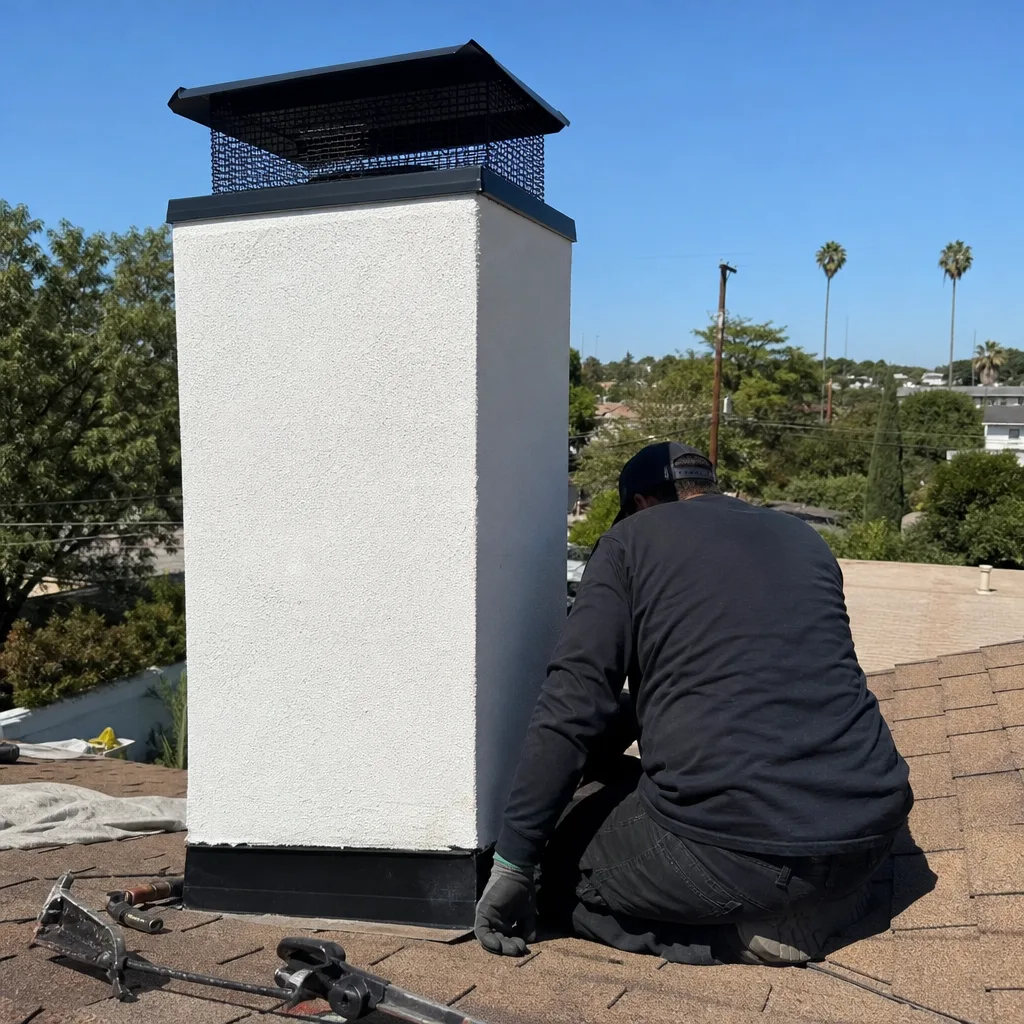
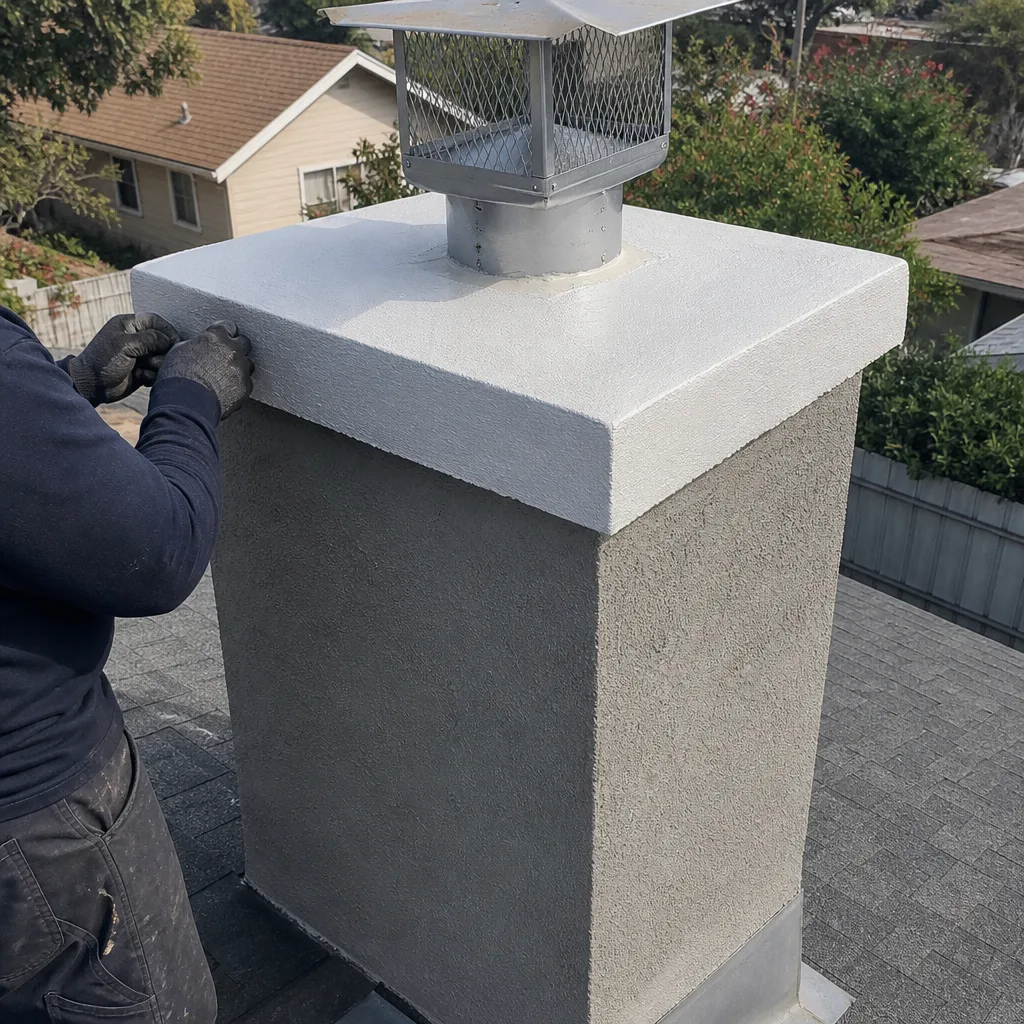
Crown cracking refers to the concrete or mortar cap that covers the top of the chimney around the flue. The crown’s job is to shed water away from the flue and the masonry. When it cracks, water flows directly into the chimney chase and the flue walls. Hairline cracks are common and usually repairable. Cracks wider than a nickel, or cracks that have caused the crown to sag or separate, are a different conversation. At that point, water has been entering for seasons, and you likely have interior damage you can’t see yet.
All three of these conditions are inspections findings, not emergencies. But they are all invitations to act before the problem migrates inward. We’ve repaired Montecito Heights chimneys where one visible crown crack led to a full liner replacement that could have been avoided if the crack had been sealed five years earlier. The exterior signals are early. Listen to them.
Interior Signs Beyond Smoke: Dampers, Oily Walls, and Hearth Dust
Not every warning sign involves smoke. Some of the most telling signals come from the hardware and surfaces inside your firebox, and they show up long before a chimney becomes dangerous to use.
Damper resistance is one of the most overlooked signs in the trade. The damper should move smoothly through its full range with modest resistance. If you have to muscle it, if it sticks partway, or if it won’t fully close, something has changed. Creosote buildup on the damper plate is a common cause. Rust from moisture is another. A damper that won’t close completely lets conditioned air escape up the chimney year-round, and a damper that won’t open fully chokes the fire’s air supply and creates exactly the smoking, creosote-heavy conditions described above. Occasionally, a damper that suddenly resists movement has been warped by a chimney fire that burned hotter than the homeowner realized.
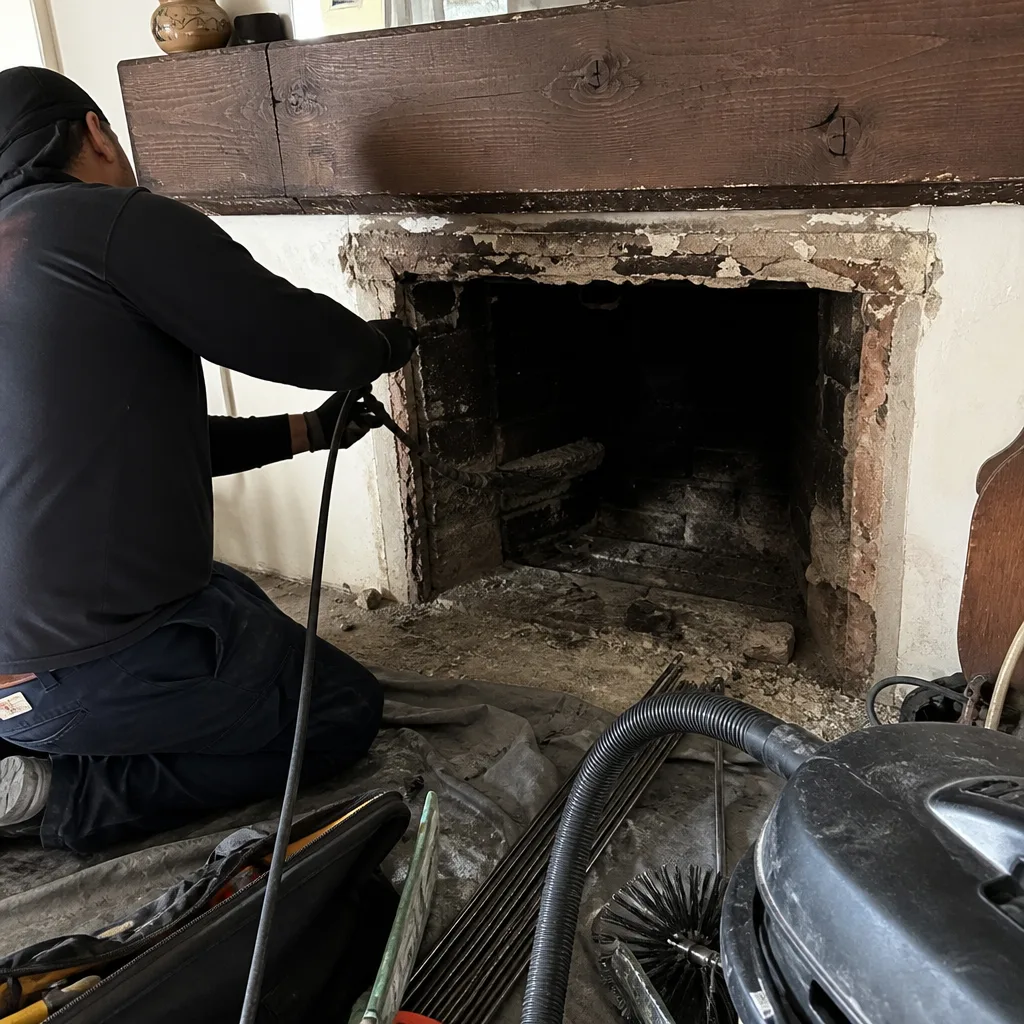
Oily or sticky residue on the fireplace walls is creosote in its liquid or tar stage. If you can run a finger along the firebox wall and come away with a brown or black smear, that’s creosote condensing on the cooler surfaces. It should not be there. A properly burning fire keeps creosote in vapor form until it exits the chimney. Oily walls mean the flue is too cold, the wood is too wet, or the fires are being burned too small and smoldery. All three are correctable, but none should be ignored.
Fine black particles on the hearth, mantel, or nearby furniture are soot fall, not ash from a recent fire. Soot falls when the flue’s inner surface has enough creosote buildup that passing air knocks particles loose and they settle back down into the living space. This is a late-stage indicator. By the time soot is falling, the creosote layer is thick enough to reduce the flue’s effective diameter, which further weakens the draft, which further accelerates creosote formation. It’s a self-reinforcing cycle.
Any one of these three signs justifies a sweep. Seeing two or more means the chimney has been asking for attention for a while. The good news is that all of these conditions are fully addressable with a professional sweeping and, where needed, a chimney repair service that can address the underlying cause rather than just cleaning the symptom.
Schedule Soon vs. Stop Now: A Decision Framework
Not every warning sign carries the same urgency. Here’s the framework we give Montecito Heights homeowners, in plain terms.
Schedule a sweep within the next few weeks if you notice any of these:
- White, chalky efflorescence on exterior brick with no visible cracks.
- A faint smoke smell that appears only on windy days.
- Oily residue on firebox walls that you can feel but not see accumulating.
- A damper that’s slightly sticky but still moves through its full range.
- It’s been more than two years since the last cleaning and you burn regularly.
Stop using the fireplace immediately and schedule an inspection before the next burn if you notice any of these:
- Black or dark smoke from the chimney during normal wood fires.
- Smoke spilling into the room, even a small amount, on more than one occasion.
- Soot fall on the hearth, mantel, or furniture.
- A strong smoke smell indoors when no fire has burned for days.
- Spalling brick with visible fragments on the roof or ground.
- Any crack in the crown wider than a nickel or any visible sagging of the crown.
- A damper that will not open or close at all, or that has warped visibly.
The distinction matters. The first category is maintenance. The second category is risk management. A chimney in the second category should not be used until a professional has assessed it, because the conditions described are the ones that precede chimney fires and carbon monoxide incidents. Nine out of ten chimney fires are caused by creosote ignition, and almost all of them announce themselves through one of the signs above before they happen.
Why Montecito Heights Chimneys Age Differently
Every neighborhood has a signature set of chimney issues, and Montecito Heights has three that we see more often than anything else.
First, the housing stock. A large share of homes in this neighborhood were built before 1960, and many still have their original masonry chimneys. The clay tile liners common to that era degrade over decades of heating and cooling cycles. When a clay liner cracks, it usually cracks vertically along a mortar joint, and once that happens, heat and gases can reach the surrounding masonry. This is not theory. It’s the same pattern we see in chimney after chimney across Montecito Heights.
Second, the topography. Homes on hillside lots experience more wind exposure than valley-floor homes, and wind across the chimney crown creates pressure differences that fight the chimney’s natural updraft. The result is more frequent draft reversal and more cold-start smoke spilling. We’ve found that Montecito Heights homes often benefit from chimney caps that are designed to stabilize draft in windy conditions, something a flat cap won’t do.
Third, the moisture cycle. The dry season pulls moisture out of masonry, and the wet season pushes it back in. Over decades, that cycle opens mortar joints and lets water reach the flue. When water and creosote mix, the creosote becomes corrosive and attacks the flue liner. Homes here that haven’t had their crowns sealed in years are on a slow path toward liner damage, even if the homeowner burns carefully.
None of this means Montecito Heights chimneys are uniquely fragile. It means the failure patterns are predictable, and predictable failure patterns are preventable with the right maintenance. That’s the point of knowing what to look for.
Common Mistakes to Avoid
- Burning wet wood and expecting the chimney to handle it. Unseasoned wood produces dramatically more creosote per fire than dry wood. In Montecito Heights, wood that’s been stored outdoors without cover through a winter is not ready to burn, even if it looks dry on the surface.
- Ignoring a faint smell because it’s intermittent. An occasional smoke smell is a warning sign, not a quirk of the house. If the smell comes and goes with the wind, the flue is telling you it’s losing its seal.
- Using the fireplace as a trash burner. Treated wood, wrapping paper, and cardboard with colored ink all deposit chemicals and resins that bond to creosote. Once that mixture hardens, it’s much harder to remove than ordinary creosote.
- Sealing visible cracks without investigating the water source. A cracked crown that gets resealed without addressing flashing problems will crack again within a season or two. The repair has to address water entry, not just cover it.
- Assuming a new house means a healthy chimney. Newer construction has its own issues, including undersized flues and prefabricated systems that need specific liners. Montecito Heights has a mix of old and new, and neither age category gets a free pass.
- Waiting for the “burning season” to think about the chimney. The best time to schedule a sweep is late spring or summer, when demand is lower and any repairs can be completed before the first fall fire.
- Treating a chimney fire as a one-time event. If you’ve had a chimney fire, even one you put out quickly, the flue has been compromised. A chimney fire that burns hot enough to ignite creosote often cracks clay liners. That chimney needs an inspection before it’s used again, no exceptions.
When to Call a Professional
Some warning signs you can diagnose yourself. The decision framework above exists so Montecito Heights homeowners have a clear sense of what they’re seeing. But there’s a limit to what a visual check from the firebox can tell you. The inside of a flue is not visible without a camera, and the condition of the liner is the single most important factor in chimney safety. If you’ve seen any of the “stop now” signs, the next step is an inspection, not another fire. If you’ve seen the “schedule soon” signs, the next step is a sweep. Both are routine work for a professional.
Ironwood Chimney Sweep offers free estimates in Montecito Heights, and we work exclusively with industry-grade materials: DuraFlex for liner systems, HeatShield for resurfacing, and Copperfield hardware where the job calls for it. If you’re not sure which category your chimney falls into, call (866) 282-3944 and describe what you’re seeing. We’ll give you an honest read and a straight answer about whether it can wait.
Frequently Asked Questions
The National Fire Protection Association recommends a chimney inspection at least once a year, and a cleaning whenever creosote buildup reaches 1/8 inch on the flue walls. For homeowners in Montecito Heights who burn regularly, that usually translates into a sweep every one to two seasons, depending on wood quality and burn frequency. If you burn occasionally and use well-seasoned wood, two years may be acceptable, but the only way to know is to have the flue checked. Call (866) 282-3944 to book a sweep and inspection.
A smoky smell in your home when no fire is burning is caused by draft reversal, which happens when the chimney’s natural updraft reverses and pushes air from inside the flue back into the living space. Common causes include a partially blocked flue, a damper that isn’t sealing, wind pressure on a hillside chimney, or negative air pressure inside the house from exhaust fans. It’s a sign that the chimney isn’t venting properly, and it should be inspected by a chimney sweep in Montecito Heights.
Cleaning the firebox and the first foot of the flue is something a careful homeowner can do with the right brush, but a full flue cleaning requires specialized tools and access to the roof, which is dangerous on the hillside pitches common in Montecito Heights. More importantly, a visual inspection by a trained sweep catches issues like cracked liners and early crown damage that a homeowner cleaning won’t see. The cleaning is the smaller part of what a professional sweep provides. Most homeowners are better served by hiring an Ironwood Chimney Sweep home service to do both parts at once.
Creosote accumulates in three stages: first-stage creosote is flaky and brushes off easily, second-stage is tar-like and requires mechanical scraping, and third-stage or glazed creosote is hard, shiny, and highly flammable, and it can’t be removed with standard brushing alone. Knowing which stage you’re dealing with determines whether a standard sweep will do the job or whether the flue needs chemical treatment or a resurfacing system like HeatShield. The only way to know is with a camera inspection.
Hairline cracks in a chimney crown are repairable and usually not urgent, but cracks wider than a nickel should be addressed before the next rainy season because they let water into the masonry and the flue. Water damage accelerates every other chimney problem: spalling brick, liner corrosion, and mortar deterioration. In Montecito Heights, where wet winters alternate with dry summers, a cracked crown left for two or three years often turns into a liner replacement. Sealing a crack is cheaper than replacing a liner.
Yes, and it’s one of the most overlooked fire safety services in any home. Lint buildup in dryer vents is a leading cause of house fires, and most homeowners never think about it because the dryer still works. A dryer vent cleaning in Montecito Heights is a quick professional service that removes the lint and reduces the fire risk. Since your chimney and your dryer vent are both part of your home’s venting safety profile, it makes sense to have both handled by the same contractor at the same visit.
The Bottom Line
A chimney speaks constantly. The smoke it produces, the smell it leaves behind, the residue on its walls, and the cracks in its masonry are all legible signals if you know how to read them. The reason most Montecito Heights homeowners get surprised by chimney problems isn’t that their chimneys failed without warning. It’s that the warnings were dismissed as normal house behavior. A smoky smell on a windy day is not normal. Oily walls are not normal. Soot on the mantel is not normal. If any of the signs in this guide are present in your home, take the next step before the next burn. Call Ironwood Chimney Sweep at (866) 282-3944 to schedule a free estimate. We’ll inspect the flue, show you what we find, and tell you honestly what needs attention now and what can wait.
Written by the team at Ironwood Chimney Sweep, serving Montecito Heights since 2013.
See the difference
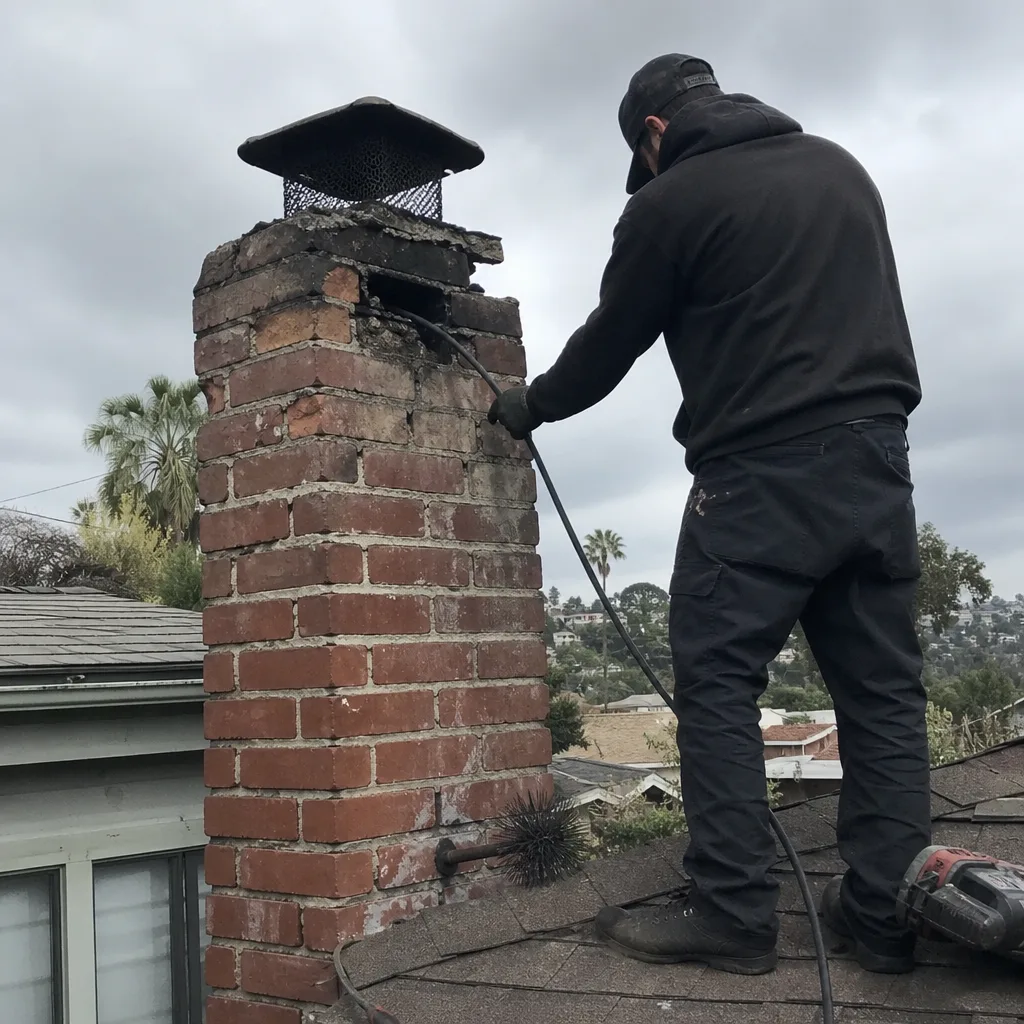 Before
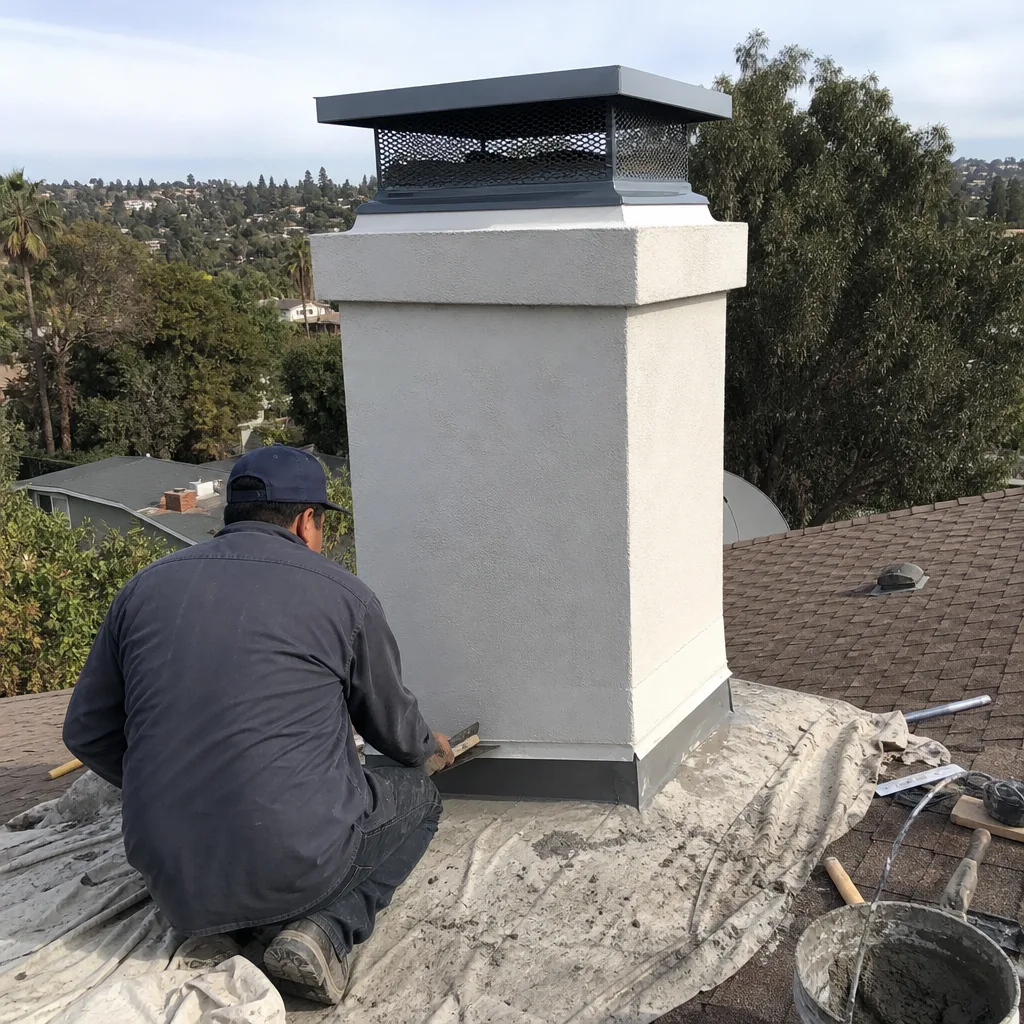 After
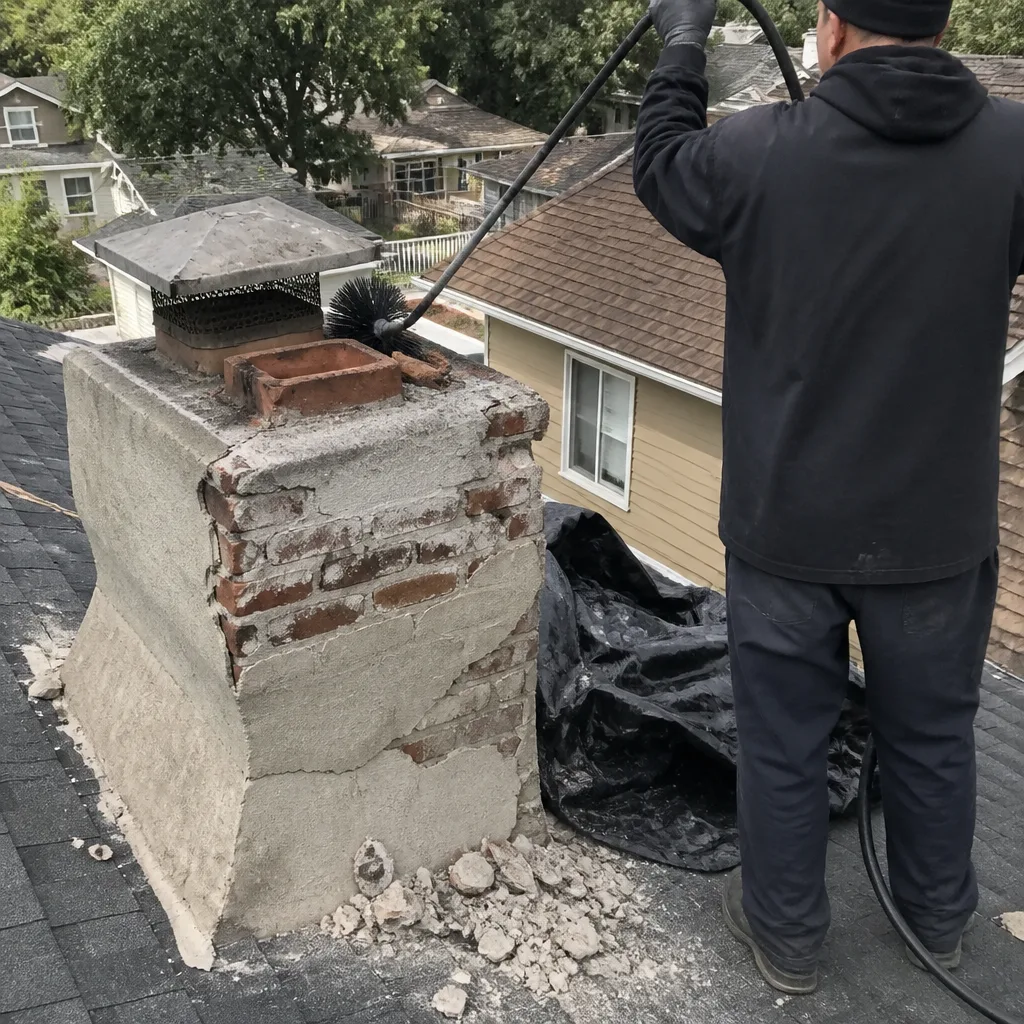 Before
 After
 Before
 After